Author Archive for R. Oliphant – Page 69

GOVERNING BOARD ADJOURNS UNTIL SEPTEMBER WHILE APPROVING A HOST OF POLICY GOVERNANCE CHANGES; MAKING SPECIAL NOMINATIONS; ADOPTING NEW POLICY MANUAL

Carver governance policy approach replaced (at least in part) with streamlined structure that uses more understandable language and reduces  amount of staff time needed to provide Board with information

Goodbye Carver model of policy governance–at least in part.

The Yavapai Community College Governing Board met at the Sedona Center on June 3 for a workshop.   After working throughout the day, it had accomplished the following:

  1. Received one-hour update from President Dr. Lisa Rhine on the “State of the College.”
  2. Unanimously approved sending nomination letters on behalf  of President Lisa Rhine and faculty member Andrea Schaben to the Association of Community College Trustees. The letters are  for consideration for the annual Chief Executive Officer Award and the annual William H. Meardy Faculty member award.
  3. Approved 4-1 a new President’s Evaluation tool.
  4. Approved 4-1 Board Self-Assessment tool that will be administered by the Association of Community College Trustees at a cost of about $3,000 per assessment.
  5. Unanimously approved a completely revised District Governing Board Policy Manual with the understanding that beginning in the fall the Board will hold workshops to possibly revise any portion of the Manual.
  6. Unanimously approved an Advocacy and Community Relations Plan.
  7. Approved 4-1 a temporary plan to divide the monthly public meeting into two segments: One two-hour session called a “Study Session” and a third one hour session called a “Business Meeting.”

A major advantage of the new policy governance approach, it is claimed,  is to reduce the enormous amount of time the Carver model of governance placed on staff to fulfill all of its various reporting requirements.  

However, many of the changes raised controversial questions about the language used to describe  the Board’s governance and the effectiveness of a particular provision. More discussions about the new model will be provided  in later Blog postings. 

 

INDIVIDUAL BOARD MEMBERS’ VIEW OF 2021-22 $92.3 MILLION BUDGET (PART 4 OF 5)

First District Representative Sigafoos lauds employees for their work; says not giving employees 3% increase will send money to contingency fund, “which is not the right thing to do”

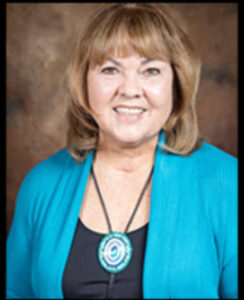
First District Representative Ray Sigafoos

First District Yavapai Community College Governing Board representative Ray Sigafoos voted to approve the  Community College’s $92.9 million budget at the May Board meeting. The budget included a 3% across-the-board increase for faculty and staff.

In his remarks about the 3% raise, he noted his 40 years experience as a member of some educational Board in higher education and his 16 years on the Yavapai Community College District Governing Board.  He commented that the Yavapai Community College’s Board does not run the Community College.  He emphasized that this is the job of the President.

He also said that it was “convenient, and also political, to posture about the taxpayer’s money.”  However, he argued that a “good bit” of the taxpayer money was spent on employees, who are delivering the “kind of education we celebrate.”  He also argued that taxpayer money was going to support taxpayer programs themselves including continuing education and other kinds of culturally related programs.

He argued that the role of the Governing Board is to represent all of Yavapai County, not section by section. He noted that the Board has set up a contingency fund in the proposed budget without a tax rate increase or an increase in tuition and fees.  He concluded that not approving the salary increase would add those funds to the already established contingency fund, which he said was “not right.”

You may view a video clip of Mr. Sigafoos speech to the Governing Board at its May meeting below.  You may also view the entire May Governing Board proceedings by going to the Governing Board website.

INDIVIDUAL BOARD MEMBERS’ VIEW OF 2021-22 BUDGET (PART 3 OF 5)

Fourth  District Representative Kuknyo rejects  approving budget indicating significant concern with not awarding employee salary increases using merit

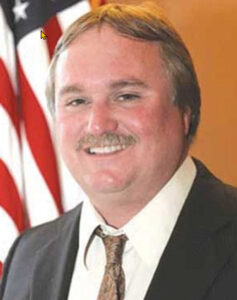
Fourth District Governing Board Member Mr. Chris Kukyno

Fourth  District Representative Chris Kuknyo  voted to reject approval of the  Community College’s $92.9 million budget at the Board’s May meeting. The budget included a 3% across the board increase for faculty and staff.  He suggested several reasons for his “no” vote on the budget with a primary one being the absence of using merit for employee salary increases.

Mr. Kuknyo indicated that while he opposed the current request for an across the board employee salary increase, he was not against increasing individual wages based on merit.

He also lauded the College for its transparency in providing the public with information and with president Lisa Rhine’s work.  However, in addition to the merit issue, he believe that the time was not right for a salary increase given the staff received one in July during the pandemic and many members of the community were still financially  struggling.

Mr. Kuknyo noted that the County primary tax rate was not increased by the Board this year and he wanted to keep it as  low as possible in the future. 

You may view a video clip below of Mr. Kuknyo’s speech to the Governing Board at its May meeting below.  You may view the entire proceedings by going to the Governing Board website.

YAVAPAI COMMUNITY COLLEGE FOUNDATION ADDS THREE NEW MEMBERS AT MAY 12 MEETING; ONE FROM VERDE VALLEY

Among the three new members added to the Foundation Board was Spectrum Healthcare Chief Executive Officer April Rhodes  from the Verde Valley.  Verde Valley’s Valerie Wood was elected to another one-year term as Foundation Chair

Foundation President Valerie Wood

The Yavapai Community College Foundation announced in a May 19 press release that it had added three new members at its May meeting:  The three new members added were:  Spectrum Healthcare Chief Executive Officer April Rhodes; Dr. Linda Mast, Associate Dean for the School of Health Sciences from Northcentral University; and APS Executive Jeff Spohn.  Valerie Wood was also elected to another one-year term as Foundation president.

Both Ms. Wood and Ms. Rhode have roots in the Verde Valley. 

“It is an honor to be a part of the Yavapai College Foundation leadership, especially during its 50th Anniversary,” YCF Board President Valerie Wood said. “I look forward to continuing the momentum in support of Yavapai College by enhancing educational, cultural, social, and economic opportunities in our community.”

New Board Member April Rhodes  has a master’s of advanced study in marriage and family therapy from Arizona State University and a master’s of business administration from University of Arizona. She is a licensed associate marriage and family therapist. She is chairperson for the Arizona Council of Human Service Providers and holds seats on the Yavapai County Board of Health, Prevent Child Abuse Arizona, Health Current and Mental Health Corporation of America.

In off hours, she spends time with her children, Alina, Tony and Logan. Her husband, David, was recently elected Yavapai County Sheriff.

New Board member Dr. Linda Mast is  Associate Dean for the School of Health Sciences from Northcentral University.  Northcentral University was founded in 1996 with the goal of offering higher education to working professionals around the world, and is an affiliate of the private, nonprofit National University System based in La Jolla, California. All of its courses are offered on-line.

Dr. Mast holds a Nursing degree from the University of Maryland; an MBA, with a health care concentration, from Western New England University; and a PhD in Educational Leadership and Policy Analysis from the University of Missouri-Columbia.

Jeff Spohn is an  18-year employee of Arizona Public Service. He is an APS Director of Distribution Operations and Maintenance. He has worked with the Prescott Valley Economic Development Foundation, the Prescott Valley Chamber of Commerce and the United Way of Yavapai County. He has a Bachelor of Science Degree in Forest Resource Management from West Virginia University.

INDIVIDUAL BOARD MEMBERS’ VIEW OF 2021-22 BUDGET (PART 2 OF 5)

Third District Representative Chevalier  approves budget but urges Administration and Board to address perceived vast inequities in community college development between the East and West sides of County

Third District Representative Paul Chevalier

Third District Representative Paul Chevalier voted to approve the Community College’s $92.9 million budget, which included a 3% across the board increase for faculty and staff.  However, in  prepared remarks delivered at the Governing Board  May budget meeting, he urged  the Board  and the Community College Administration to address the vast inequities in Community College development between the East and West sides of the County.

Mr. Chevalier listed the following as some of his concerns as he urged the Administration to create an aggressive Community College development plan for the East side of the County (Sedona and the Verde Valley) with a population of more than  75,000 residents:

  1. Only 13% of students taught by the Community College were taught on the East side even though the East side accounts for one-third of the County population.
  2. Three times as many courses are offered on the West side as on the East side. Music and  Performing Arts classes are large and expanding on the West side.  Few, or almost none, can be found on the  East side of the County.
  3. In May 2021, Yavapai Community College  awarded 1,550 degrees or certificates on the West side but only 361 on the East side.
  4. Serious community college development on the East side of the County will help reduce the current distrust of how resources are allocated as between residents of the East and West sides of the County.
  5. Yavapai Community College has 17% of its assets tied up in arts and cultural facilities with almost all of it located on the West side of the County. It spends about 12% of its budget on community arts and culture, an estimated  $10 million, with  almost all of it spent on the West side. 
  6. Between 2011 and 2018 Yavapai Community College cut in half the number of classes and teachers on the East side and eliminated almost the entire East side administrative staff as  the West side took control of running the East side remotely.
  7. On West side of the County, the Community College in 2019/2020 held 39 public performing arts events and 28 public film events. On the East side it held three performing arts events.  
  8. West side has 1,100 seat auditorium; East side has none.
  9. The West side of the County will have seven athletic teams, gymnasium, and athletic fields. East side has none. East side taxes help pay for all of the West side’s athletic endeavors.
  10. The Community College provides West side retirees with a seven-court tennis complex, an Olympic sized pool and sauna, plus a state-of-the-art Child Care Center. Nothing similar provided on East side to any of its residents.
  11. And much more as outlined in his speech.

Mr. Chevalier’s prepared remarks follow.  A video of his presentation to the Governing Board follows the remarks. You may view the entire video of the May Governing Board meeting at the District Governing Board web site. 

MAY BUDGET 

I am going to comment about the inequities between the east side and the west side of the mountain that this budget is funding.

The total number of students taught in classes on the West side in the last pre-pandemic year 2019/2020 were 1,517 versus 229 taught in classes on the east side. That is a ratio of 6.6 to 1. In 2019/2020 only 13% of the students taught in classes were taught on the east side even though the population of the East side is between 30 and 33% of the total county. This month, May 2021, the college awarded a total of 1,550 degrees or certificates on the west side and 361 on the East side. That is a ratio of 4.3 to 1. And yet the total population of the West side is only 2 to 1 that of the East side. The West side CTEC by itself had more students taught in classes than on the entire East side. 

One important reason for this is that over three times as many different courses are offered on the west side as on the East side. As a result, East siders’ have far fewer course choices. Less choice equals fewer students taking classes.

Before the second decade of the 21st century the student population on the East side reached 26% of the total college population. After that it plummeted significantly to just 13% now. 

Between 2011 and 2018 the college cut in half the number of classes and teachers on the east side and eliminated almost the entire east side staff and the West side took control of running the east side remotely. These cuts and staff eliminations made available for west side use millions of dollars of tax money paid by East side taxpayers’.

As a result of these actions relationships between the West side college administration and East siders’ soured. The rift has never mended.

Read More→

INDIVIDUAL BOARD MEMBERS’ VIEW OF 2021-22 BUDGET (PART 1 OF 5)

Chair McCasland lauds faculty and staff for outstanding work during pandemic; argues inflation, among other factors, supports 3% wage increase

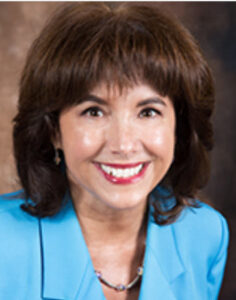
Governing Board Chair Deb McCasland

Yavapai Community College Governing Board chair Deb McCasland was a strong, enthusiastic proponent of approving the 2021-22 budget and the 3% across the board increase for faculty and staff.   She indicated she was proud of the fact the $92.9 million budget did not increase student tuition,  increase the County Property Tax rate, and was balanced.

She also pointed out that the budget allowed for the 3% wage increase and still placed several million into the Community College’s cash reserves. 

She said that Prescott Price Index was up 3.3 percent. Other costs including the following were listed by here as increasing and supporting the 3% increase:  Petroleum costs up 49%; Lumber products up over 300%; Car and truck prices up 21%; and new  Government spending was into the trillions. 

Furthermore, she said that  the cost of living in Yavapai County was 4% above national average, which is being driven by the  skyrocketing price of housing.

She emphasized that Community College staff had faced financial challenges over the past year and faithfully and effectively served the students while under enormous stress.  She believed the Community College was now “stronger than ever.” 

You may listen to all of Chair McCasland’ s speech at the May 18 Governing Board meeting below.  Or, you may view it and the entire meeting by going to the Community College web site and clicking on its video. https://yavapai.hosted.panopto.com/Panopto/Pages/Viewer.aspx?id=faf8f10c-192d-4a2f-9113-ad2d0006ad04.

(Part 1 of a 5 part series to be presented over the next few weeks of the budgetary views of the Governing Board.) 

YAVAPAI COMMUNITY COLLEGE DISTRICT GOVERNING BOARD APPROVES $92.9 MILLION COLLEGE BUDGET FOR 2021-2022 FISCAL YEAR 4-1

No Increase in Property Tax Levy or Tuition; Representative Chris Kuknyo only dissenting vote

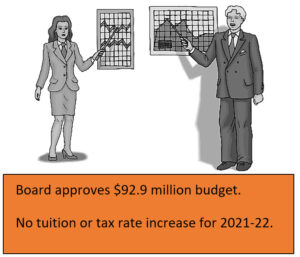
The Yavapai Community College District Governing Board (DGB) approved the College’s $92.9 million  budget for 2021-2022 at its  May meeting. The vote was  4-to-1 with Mr. Chris Kuknyo dissenting.

 The budget does not include an increase in the property tax levy for Yavapai County residents, which according to the Community College, effectively lowers  the total property tax in Yavapai County for the third consecutive year.

The approved budget also does  not increase tuition costs for students.  This makes the Community College a great value to County residents.  The Community College’s s base tuition rate (there are tiers of rates)  remains at $95 per credit hour for part-time students. Full-time students receive a discount and only pay $1,140 for a 15-credit semester (they get three credits free if they take 15 credits per semester).

The Community College reports in its press release on the budget meeting that its  tuition “is the second-lowest-cost for full-time students in the state and roughly 80% lower than Arizona public universities.”

The Community College also reports that the “approved fiscal year 2021-22 budget totals $92.9 million and is 12.4% more than the current fiscal year 2020-2021 budget. The increase is due primarily to $9.8M in additional grants to be spent in Yavapai County.”

ARIZONA TO PROVIDE $7.5 MILLION IN COMMUNITY COLLEGE SCHOLARSHIPS FOR ELIGIBLE UNEMPLOYED WORKERS

Must meet criteria of Return-to-Work-Bonus program to be eligible for a scholarship

On May 13, 2021, Governor Doug Ducey and DES announced Back To Work programs to help individuals transition from unemployment to a new job, and ensure those currently receiving unemployment have support available to help them in this critical step forward. With this new program, Arizona will stop taking the federal government’s supplemental pandemic unemployment benefit effective Saturday, July 10. Arizona will also provide support for unemployed individuals seeking to upskill their careers with adult education programs as well as additional child care opportunities:

Return-to-Work Bonuses

Arizona will set aside $300 million of federal resources to offer a one-time bonus of $2,000 to certain eligible individuals who return to the workforce and get a full-time job, while those who return part-time will receive $1,000. The bonus will be awarded when the individual has stopped filing for unemployment benefits and completed at least 10 weeks of work with an employer, and will be offered on a first-come, first-serve basis. 

In order to qualify for the bonus, an individual must have already filed for unemployment benefits. Arizonans filing for unemployment benefits after May 13 will not be eligible for Return-to-Work bonuses. The individual must also make $25 per hour or less, equivalent to a yearly salary of $52,000, at their new job and must begin working by Labor Day — Monday, September 6. Qualifying individuals may accept a job with an employer immediately to qualify for the bonus. 

Education Incentives

The State will also provide $7.5 million for community college continuing education scholarships for currently unemployed workers who are eligible for the Return-to-Work bonuses — as well as $6 million for GED test preparation and exam fees for eligible workers without a high school diploma.

WILL “DREAMERS” EVENTUALLY BE ELIGIBLE TO PAY IN-STATE TUITION AT YAVAPAI COLLEGE?

Voters to answer question in 2022 state-wide voter referendum

Voters will decide whether undocumented students that graduate from Arizona high schools, widely known as “Dreamers,” will be eligible to pay in-state tuition at Yavapai Community College and other Arizona colleges and universities.
The Arizona House of Representatives decided to place the question on the 2022 ballot for voter decision.  If approved by voters, the referendum  would repeal portions of Proposition 300, a 2006 voter-approved ballot question that required the verification of immigration status to access several publicly funded services, including college tuition and financial aid.

The resolution does not need the governor’s signature. 

“Dreamers”  are young people who have grown up as Americans, identify themselves as Americans, and many speak only English and have no memory of or connection with the country where they were born. Under current immigration law, most “dreamers” have  no way to gain legal residency despite living  in the United States  most of their lives.

Many “Dreamers” did not discover that  they were unauthorized immigrants until they were teenagers when  they discovered they couldn’t obtain a driver’s license, or complete  financial aid forms for college because they didn’t have Social Security numbers.

GOVERNOR DOUG DUCEY SIGNS LEGISLATION ALLOWING COMMUNITY COLLEGES TO OFFER SOME BACCALAUREATE DEGREES

Yavapai Community College president Dr. Lisa Rhine says implementation two or three years away

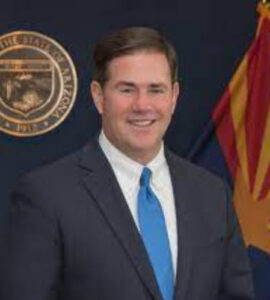
Governor Doug Ducey

Governor Doug Ducey signed legislation this past Tuesday that will allow Yavapai Community College to offer some baccalaureate degrees in the future. According to an interview given to Mr. Bill Helm, in the Verde Independent of Sunday, May 9, 2021, College President Dr. Lisa Rhine said the “process for implementing new baccalaureate degrees will take time.”

Dr. Rhine indicated that offering certain new upper division programs is two  to three  years away. She said that programs must be identified and approved by the District Governing Board. She also said that the curriculum has to be created and that any proposal then submitted to the Higher Learning Commission for approval.

The legislation contains specific requirements for any Community College considering offering new upper division programs leading to a baccalaureate degree. As noted by Dr. Rhine in her interview with the Verde Independent newspaper, the bill  requires a district governing board to determine if there is a local workforce need for the degrees that would be offered. There is also a provision that requires  a study of the costs and a determination of whether  a similar degree is offered by other Arizona colleges.

There are specific restrictions on Pima and Maricopa counties. In those districts, community colleges are limited to offering no more than 5% of their degrees at the baccalaureate level for the first four years. After four years, the number is  capped at 10%.

Community Colleges  also cannot charge tuition for the  courses offered to  juniors and seniors that is 150% higher than the fees for courses in the first two years. Finally, before new degrees can be offered, public universities are given an opportunity  to provide a written response to any planned community college degrees.

Dr. Rhine said during her interview that she will direct her staff to begin researching possible new programs by using “labor market data and community needs to determine what would have a lasting impact on our students and communities.”

Sources: Verde Valley independent, Sunday, May 9, 2021 article by Mr. Bill Helm; Howard Fischer Capitol Media Services, https://tucson.com/news/local/arizona-lawmakers-ok-bill-to-allow-4-year-community-college-degrees/article_6aa4fafa-a847-11eb-9f54-e3a56056748a.html; April 30 Blog.