Argues that it is troubling that a single member of Board can prevent discussion on matters of importance

Representative Toby Payne
Editorial: As one of five members serving on the Yavapai Community College District Governing Board, I am both puzzled and dismayed by Board Chair Deb McCasland’s repeated refusal to permit me to place even a single item on the Board agenda for discussion. It is troubling that one individual can block such a request, particularly when it conflicts with existing Board policy and undermines the collaborative nature of our governance.
I began raising concerns as early as January, when I observed a growing lack of harmony among members of the Board. At the center of this discord was what I saw as a troubling conflict: the role of individual Board members as defined by existing Board policy appeared to be at odds with both state statutes governing Board proceedings and guidelines issued by the Higher Learning Commission. This potential inconsistency warranted serious discussion—and needed to be addressed.
On January 19, I sent Board Chair Deb McCasland a written request to place an item on the next Board agenda, as permitted under existing Governing Board policy. I outlined proposed actions and requested a formal discussion. She denied the request.
Since then, I have repeated my request multiple times, only to be ignored. This is despite clear language in Policy #308, which states that if a Board member believes the Chair has not acted appropriately regarding an agenda request, a matter of Board policy “will be placed on the next Board agenda.”
Why the Board Chair continues to disregard the plain language of our own policy is both troubling and difficult to comprehend. Her refusal raises serious concerns about procedural fairness and the integrity of Board governance.
Toby Payne
Third District Yavapai Community College District Governing Board representative
(Reprinted with permission of the author.)
 Arlyssa D. Becenti, writing in the Wednesday, December 12 edition of the Arizona Republic, reported that the Native American Convocation scheduled for May was cancelled at Mesa Community College (MCC) because of the perceived DEI mandate issued by President Donald Trump. The event was to be a celebration of the academic achievements of Native American students attending Mesa Community College.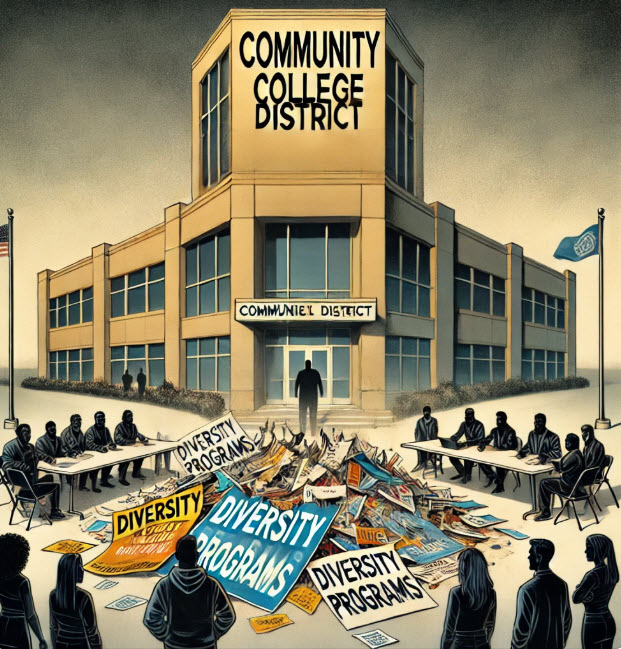
 Federal judge Deborah Boardman on Monday, February 24, 2025 issued a temporary restraining order saying disclosure of the education department’s sensitive personal information to DOGE affiliates is irreparable harm that money damages cannot rectify.” She also said the Office of Personnel Management can’t disclose the information.
 COMMENTARY: The actions by the Trump administration’s newly created Department of Government Efficiency (DOGE) may have a significant impact on the operations of Yavapai Community College. There is concern because DOGE is already taking away millions of dollars in existing grants and contracts from various educational institutions. In addition to this concern, the Trump administration has mandated that educational institutions eliminate anything that directly or indirectly might be linked to what are commonly called “Diversity, Equity and Inclusion (DEI)” programs or projects.
 Editorial: In a move that appears calculated to consolidate power and preempt scrutiny, Yavapai Community College leadership has presented a resolution that will be discussed and voted on at Tuesday’s meeting. The resolution, apparently prepared with the cooperation of an outside consultant, is designed to significantly curtail the authority of its Governing Board.
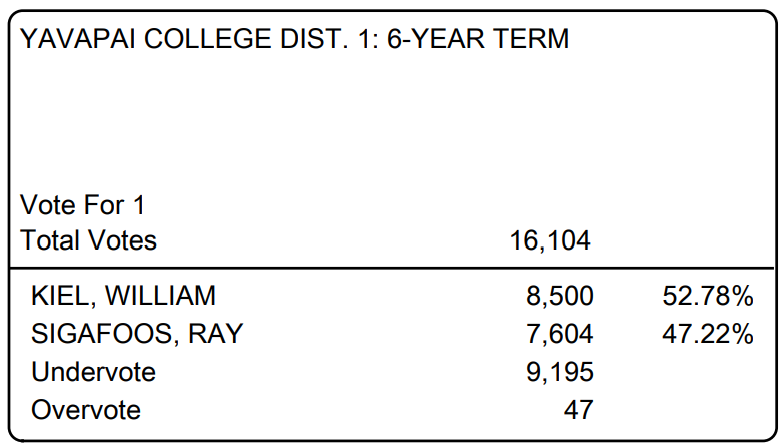
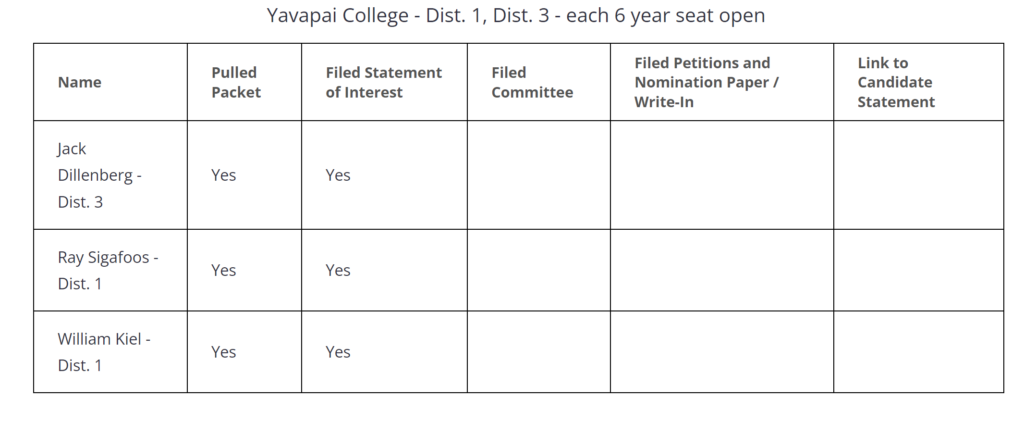
 So far, at least three persons have shown interest in gaining a seat on the Yavapai Community College Governing Board. In District 1, the incumbent Ray Sigafoos has pulled a packet and filed a statement of interest. William Kiel has likewise pulled a packet and filed a statement of interest. Neither has yet filed a petition.