McCasland met with almost open hostility when she questioned whether College was complying with drug enforcement policies when dealing with baseball team
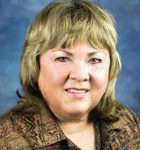
Deb McCasland
The deaths of two Yavapai Community College students last Saturday that may have been drug related raises the troubling question of what could have been done to prevent this tragedy, if anything? The one member on the Community College Governing Board who has showed deep concern for potential drug problems on campus and specifically on the baseball team is representative Deb McCasland.
Recall that last May she raised the question at the Board meeting of whether President Wills was properly complying with a Governing Board directive to enforce certain Campus policies regarding illegal drug usage. Her question sparked a somewhat vitriolic response from Wills and Board member Pat McCarver. McCasland expressed her concern saying that as a Board member she had an obligation to look into possible criminal violations if they occurred on Campus. She also said that she was disappointed it “took her action to shed some light on what was going on.” Wills insisted she had done all that was required regarding an incident involving the baseball team and had imposed appropriate sanctions.
Among questions by McCasland was one involving the absence of police logs showing that concerned parents had visited and alerted police to the possible drug use issue. Why, after there had been several visits to the police about the alleged drug incident did the police logs not show the contacts? McCasland asked. Wills responded that she should talk to the police.
Wills said that she didn’t appreciate McCasland’s handling of the matter and encouraged her to speak privately (secretly out of public view) to her in the future about such matters. Wills also said that the College was imposing “all the different sanctions that will go into place” and improve procedures. She did not elaborate.
McCarver jumped to Wills aid during the discussion saying that McCasland was unprofessional by continuing to pursue the matter publicly during the Board meeting. She also urged McCasland to meet with Wills privately (secretly out of public view).
Now, with these two deaths, the question is this: Should the Board, as McCasland has argued, insist on a review of the enforcement of drug usage policy on campus and as applied to its athletic program?
The Governing Board discussion about drug use by the baseball team raised by McCasland at the May meeting appears below.
 Under the Carver model of governance adopted by the Governing Board, Wills is obligated to keep the Governing Board members well informed. McCasland expressed obvious concern that Wills’ was not meeting that obligation. McCasland wrote that “information that affects the Board should be shared with all the Board members as it occurs, not just select individuals.” She wrote that “open communication is very important to provide trust and respect, Finding out about college administrative matters in the press and not first from the President is not effective communication.”
 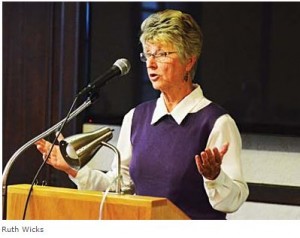 Long-time Verde Valley educator Ruth Wicks pointed out to the College Governing Board at its last meeting in March that it will spend about $195.3 million dollars on the West side of the County in capital development from the year 2000 to 2024 if the controversal Ten-year-Plan is followed. By comparison, it will spend only $41.5 million on the East side of the County.
  He also asked the Board whether the new Sedona Center Parking lot and the Verde Valley Governing Board Advisory Committee are intended to merely placate Verde Valley residents until the “storm blows over.” Then, the Board can proceed with the Ten-Year-Plan unimpeded.
 When the Film School was closed down, the Center contacted the Community College explaining it could create a school of archeology and geology. The Center met with College officials in Prescott who told them the proposal had a lot of possibilities. Then, two days later they saw a press release indicating the College was selling the Sedona Center. “The lack of candor at the [Prescott] meeting,” said Mr. Zall, “has left a very sour taste in our mouth.”